
"Grade 5"
5000 article(s) found

Introduction to the flavor and taste characteristics of Ethiopian coffee manor with rich alcohol thickness
The highest grades of Ethiopian washed coffee Yega Chuefei G1 G2 Sidamo (Yirgacheffe, Sidamo) are Grade 2 and Grade 3 (G2, G3), while most of the sun-processed coffee in eastern Ethiopia are Grade 4 or Grade 5 (G4, G5). In many cases, level 4 coffee is marked as level 5 in order to reduce taxes. At present, the grading is not uniform and messy, because there is also sun processing.

Introduction to the flavor and taste characteristics of Ethiopian coffee manor with rich alcohol thickness
The highest grades of Ethiopian washed coffee Yega Chuefei G1 G2 Sidamo (Yirgacheffe, Sidamo) are Grade 2 and Grade 3 (G2, G3), while most of the sun-processed coffee in eastern Ethiopia are Grade 4 or Grade 5 (G4, G5). In many cases, level 4 coffee is marked as level 5 in order to reduce taxes. At present, the grading is not uniform and messy, because there is also sun processing.
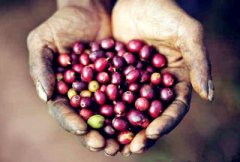
The classification of Colombian boutique coffee Colombian coffee characteristics Colombian coffee taste brother
According to the classification of defective beans, defective beans can be divided into two types:-first: called first-class defects-second: called second-level defects. First: main defects (defects that affect the taste characteristics of coffee): black beans. Private exporters of moldy beans or sour beans: no more than 12 national coffee committees: no more than 8 first-level defective beans, second: secondary defects

Introduction to the description of taste and flavor of high-quality coffee beans in Ethiopian coffee farm
Grade of Ethiopian coffee: Ethiopian washed coffee Yega Chuefei G1 G2 Sidamo (Yirgacheffe, Sidamo) has the highest grades 2 and 3 (G2, G3), while sun-processed coffee in eastern Ethiopia is mostly grade 4 or 5 (G4, G5). In many cases, level 4 coffee is marked as level 5 in order to reduce taxes. At present, the classification is not uniform and there are

Uganda coffee beans taste grinding scale varieties of production area processing method Manor introduction
The quality grade of coffee in Uganda: Bugisu AA (only 4% of the country's total production) Bugisu A Wago Wugar A (all of which belong to washing treatment) and a small amount of sun-dried beans Drugar Bugisu AA where AA indicates the grade of coffee, representing the

Grade of Ethiopian coffee | ECX rating and scoring criteria? Special selection of ECX in Yega Xuefei producing area
Professional coffee knowledge exchange more coffee bean information please follow the coffee workshop (Wechat official account cafe_style) the grade of Ethiopian coffee | ECX grading and scoring criteria? Yega Xuefei production area ECX specially selected washing G1 flavor? Ethiopian washed coffee Yega Chuefei G1 G2, the highest levels of Cedamo (Yirgacheffe, Sidamo) are level 2 and 3 (G2, G3)
Boutique coffee beans: the detailed classification of Colombian coffee beans teaches you to know boutique coffee beans.
According to the classification of defective beans, defective beans can be divided into two types:-first: called first-class defects-second: called second-level defects. First: main defects (defects that affect the taste characteristics of coffee): black beans. Private exporters of moldy beans or sour beans: no more than 12 national coffee committees: no more than 8 first-level defective beans, second: secondary defects

Graded coffee raw bean treatment
At present, there are three main rating criteria for raw coffee beans, and different countries adopt different rating methods according to their own production conditions and national conditions (not all coffee producing countries adopt the same method). Let's introduce these three popular rating methods. One: the reason for the emergence of such a classification standard according to the altitude of the coffee producing area is mainly because of the high level.

Classification and causes of defective beans in Fine Coffee SCAA
The growth environment of boutique coffee beans also has higher requirements. Generally grow at an altitude of 1500 meters or even more than 2000 meters above sea level, with appropriate precipitation, sunshine, temperature and soil conditions. Some world-famous coffee beans also have a special geographical environment, such as the alpine clouds in the Blue Mountains, the free shade provided by the afternoon clouds in Kona, and the volcanic ash soil in Antigua.

A brief introduction to the description of the flavor and aroma characteristics of the boutique coffee beans full of softness.
The highest grades of Sidamo (Yirgacheffe, Sidamo) are Grade 2 and Grade 3 (G2 and G3), and most of the sun-processed coffees in eastern Ethiopia are Grade 4 or Grade 5 (G4 and G5). In many cases, level 4 coffee is marked as level 5 in order to reduce taxes. At present, the grading is not uniform and messy, because there are primary and secondary sun processing (Grand G).

Introduction to the grade of Ethiopian coffee beans
The coffee producing areas of Ethiopia are Sidamo, Harald and Sidamo, Harrar and Yirgacheffe. Sidamo and Harrar are provinces and divisions. Sidamo is located in the south of Ethiopia bordering Kenya, and Harrar borders Somalia in the east of Ethiopia. Although Yirgacheffe is a community in the Sidamo region, due to soil composition and water content and other reasons.

Ethiopia-Coffee Origin, producing areas, characteristics, introduction
Grade of Ethiopian coffee: Ethiopian washed coffee Yega Chuefei G1 G2 Sidamo (Yirgacheffe, Sidamo) has the highest grades 2 and 3 (G2, G3), while sun-processed coffee in eastern Ethiopia is mostly grade 4 or 5 (G4, G5). In many cases, level 4 coffee is marked as level 5 in order to reduce taxes. At present, the classification is not uniform and there are

Introduction to the characteristics of High-quality Coffee produced by the Grinding degree treatment method of Ethiopian Coffee Manor
Grade of Ethiopian coffee: Ethiopian washed coffee Yega Chuefei G1 G2 Sidamo (Yirgacheffe, Sidamo) has the highest grades 2 and 3 (G2, G3), while sun-processed coffee in eastern Ethiopia is mostly grade 4 or 5 (G4, G5). In many cases, level 4 coffee is marked as level 5 in order to reduce taxes. At present, the classification is not uniform and there are

Ethiopian Arabica coffee with rich body Original growing environment Fine coffee
The highest grades of washed Ethiopian coffee Yirgacheffe G1 G2 Sidamo are Grade 2 and Grade 3 (G2, G3), and the coffee processed in the sun in eastern Ethiopia is mostly Grade 4 or Grade 5 (G4, G5). In many cases, fourth-grade coffee is labeled as five-grade in order to reduce taxes. Now the classification is not very uniform, some chaos, because there are sun processing
Basic knowledge of fine coffee grading of raw coffee beans
At present, there are three main rating criteria for raw coffee beans, and different countries adopt different rating methods according to their own production conditions and national conditions (not all coffee producing countries adopt the same method). Let's introduce these three popular rating methods. One: the reason for the emergence of such a classification standard according to the altitude of the coffee producing area is mainly because of the high level.

What is the grading system for Ivorian coffee? What is the variety of coffee grown in C ô te d'Ivoire?
Professional coffee knowledge exchange more coffee bean information please follow the coffee workshop (Wechat official account cafe_style) C ô te d'Ivoire is the world's 83rd largest export economy. In 2016, C ô te d'Ivoire exported US $10.3 billion and imported US $815 million, with a trade surplus of US $211 million. In 2016, the gross domestic product of C ô te d'Ivoire was US $36.4 billion, with a total per capita GDP.

Introduction to the treatment method of grinding degree for describing the taste and flavor of Ethiopian Sidamo Chiso coffee
Sidamo Shakiso production area a) Gr-1 is available both in washing and in the sun, on the condition that there are zero defects and Premium Cup. Whether it's washing or tanning, Gr-1 rates the boutique of the boutique or Cup ofExcellence coffee. B) the lowest level of sun-tanned Sheffield and Sidamo is Gr-4, unlike Gemma with Gr-5. But if sunny snow is the general exporter of Gr-4, Egypt will use
Grading of raw coffee beans
There are two ways to classify raw coffee beans, one is the filter number, and the other is the elevation. It is divided by the filter number, and the size is size in terms of the screen size. Round beans are generally smaller than flat beans, between 8-13 and 12-29. 8, 9, 10. 12, 13. 18. 29 = small, medium, ordinary. Quasi-big. Big, extra large. The bigger the size, the bigger the beans. Like SC-.

Description of the taste of Manning Sidamoye plus snow coffee beans
Manning Sidamoye Snow Coffee Coffee beans taste description Water washing: Grade-1;Grade-2 (G1G2) Sun: Grade-1 and Grade-3~Grade-5 (G1G3G4G5) A few notes: a) both washing and sun exposure, there is Gr-1, provided that there are zero defects and Premium Cup. Whether it's washing or tanning, Gr-1 is the best of the boutique or Cup of Excellence coffee.

Why is the selection of coffee graded? What are the ways to grade coffee?
Select coffee is usually the top coffee; but what does the top coffee represent? Who is in charge of grading? How should it be graded? Although grade is not the only criterion for identifying flavor, it is still a fairly objective indicator. Why there are different ways to manage the origin of graded coffee; some are made up of large and small farmers, and some are dominated by expert enterprises. Even if the same